
Leading Bamboo Cotton Muslin Fabric Manufacturer in India
“`html

The New Gold Standard for Newborn Skin: Why Bamboo-Cotton Blends Rule the Modern Nursery

Every parent knows that feeling. You bring your newborn home, and suddenly every single thing around them feels important. The room temperature. The light. The sounds. And yes, the fabric that touches their skin every single minute of the day.

This is where most parents start asking the right questions. What fabric is actually safe? What is truly soft? What will not irritate my baby’s skin?

The answer that keeps coming up, again and again, is bamboo-cotton muslin. And once you understand why, you will never look at baby fabric the same way again.

Why Newborn Skin Needs Special Attention

Newborn skin is not just smaller adult skin. It is completely different in how it works and what it needs.

A baby’s skin is almost five times thinner than an adult’s. It absorbs things faster. It loses moisture quickly. It cannot regulate temperature the way grown skin can. And because a newborn’s immune system is still developing, any irritation can turn into a real problem fast.

Here is what that means practically:

Rough fibers cause friction rashes

Synthetic fabrics trap heat and cause sweating

Chemically treated fabrics irritate sensitive skin from the inside out

Poor quality fabric loses its softness after washing, getting rougher with every use

So when choosing fabric for a newborn, you are not just choosing comfort. You are choosing protection.

What Is Bamboo-Cotton Muslin and Why Is Everyone Talking About It?

Muslin is one of the oldest fabrics in the world. It has been used in South Asia for centuries because of its open weave and natural breathability. The weave is loose, cross-hatched, and light, which means air moves through it freely.

Now take that classic weave and combine it with bamboo and cotton fibres, and you get something genuinely special.

Bamboo fibre is naturally:

Incredibly soft at the microscopic level, because bamboo strands are round and smooth with no rough edges

Antibacterial, which means it resists the growth of bacteria on the fabric surface

Moisture-wicking, meaning it pulls sweat away from the skin and dries fast

Hypoallergenic, making it safe for the most reactive skin types

Eco-friendly, because bamboo grows rapidly without pesticides or excessive water

Cotton brings durability, structure, and breathability that parents already trust. When these two fibres are blended and woven into muslin, the result is a fabric that is light, strong, breathable, incredibly soft, and gets even softer with every wash.

That is the bamboo-cotton muslin difference.

Real Benefits That Parents Actually Feel

Parents who switch their newborns to bamboo-cotton muslin products notice changes almost immediately. These are not exaggerated promises. These are consistent experiences shared by families across the world.

Babies sleep better when wrapped in bamboo-cotton muslin because the fabric helps keep them at the right temperature. Not too hot. Not too cold. That balance reduces restlessness and supports longer, more peaceful sleep.

Skin irritation goes down noticeably. Parents who were managing constant redness on their baby’s neck, back, or legs after swaddling see that redness disappear when they switch to bamboo-cotton muslin.

The fabric holds up through repeated washing without turning rough or stiff. That means you are not replacing swaddles and wraps every few weeks. One good bamboo-cotton muslin product stays soft through dozens of washes.

For parents whose babies have eczema or other diagnosed skin sensitivities, the hypoallergenic, chemical-free nature of quality bamboo-cotton muslin fabric makes a meaningful difference in daily comfort.

What to Look for When Buying Bamboo-Cotton Muslin Products

Not all bamboo-cotton muslin products are created equal. The quality of the fabric depends entirely on how it is made and where it comes from.

Here is what to check:

Look for OEKO-TEX certification, which confirms the fabric is free from harmful chemicals and dyes

Check the bamboo-to-cotton ratio, a blend of around 70% bamboo and 30% cotton gives the best balance of softness and durability

Make sure the fabric is pre-washed before use so it arrives soft and ready for your baby

Verify that the coloring and printing process is non-toxic and safe for skin contact

Choose products made by manufacturers with transparent sourcing and quality control processes

The origin of the fabric matters just as much as the blend. This is where choosing the right manufacturer becomes the most important decision.

Why Casa Fashion Is the Name Parents and Brands Trust

Casa Fashion has spent years building a reputation in baby fabric that is based on consistency, care, and craftsmanship. As one of India’s most respected names in this space, Casa Fashion understands exactly what newborn skin needs and builds every product around that understanding.

The fabric produced by Casa Fashion goes through rigorous testing at every stage, from raw fiber selection to final weaving. Every batch is checked for softness, consistency, colorfastness, and safety before it leaves the facility.

Casa Fashion does not cut corners on sourcing. The bamboo used in their blends is sustainably grown. The cotton is carefully selected. The muslin weave is done with precision to ensure uniform breathability across the entire fabric surface.

For parents choosing products for their newborns, that level of attention is everything.

How Casa Fashion Serves Businesses as a Bamboo Cotton Muslin Fabric Manufacturer in India

Beyond serving individual families through finished products, Casa Fashion plays a major role in the global baby product industry as a leading Bamboo Cotton Muslin Fabric Manufacturer in India.

Baby brands, retailers, and businesses across multiple countries source their fabric from Casa Fashion because the quality is reliable, the capacity is strong, and the compliance with international safety standards is built into every order.

Whether a business needs custom fabric blends, private label manufacturing, or bulk fabric orders with consistent delivery, Casafashion delivers without compromise.

Conclusion

Choosing the right fabric for your newborn is one of the first and most important decisions you make as a parent. Bamboo-cotton muslin stands apart because it was designed, by nature and by craft, to do exactly what newborn skin needs: breathe, protect, soothe, and last.

Behind the best bamboo-cotton muslin products on the market today is Casa Fashion, a trusted Bamboo Cotton Muslin Fabric Manufacturer in India that brings the same care to every thread as you bring to every moment with your child.

Your baby deserves fabric that was made with them in mind. That fabric exists. And Casa Fashion makes it.

“`
Canvas Tote Bag Manufacturer India

Why the Trending Tote Bag is Your Best Companion for Long Road Trips

Long road trips have a packing problem that most travellers never fully solve.

You need something close by for snacks, chargers, water bottles, and books. Your main luggage is buried in the boot. Your handbag is too small. Your backpack digs into your shoulders within the hour.

The tote bag has quietly become the answer to all of this. The trending, well-made tote bag that millions of travellers are now choosing as their go-to road trip companion.

The Seat Companion That Never Gets in the Way

On a long road trip, every inch of seat space matters. You need essentials within arm’s reach without things toppling over every time the driver brakes.

A tote bag sits upright naturally on a car seat. Its open top gives instant access without unzipping or digging through compartments. You reach in, take what you need, and place it back without any fuss.

The flat base keeps it stable on uneven surfaces. It does not roll. It does not tip. It simply sits beside you like a cooperative travel partner throughout the entire journey.

It Holds Everything a Road Trip Actually Demands

Think about what a road trip day looks like. Water is within reach constantly. Snacks between meals. A charging cable accessible from the dashboard. Sunglasses, earphones, wet wipes, and a light layer for when the air conditioning gets too cold.

A standard tote handles all of this comfortably. Its wide opening accommodates bulky items like water bottles without forcing them sideways. The interior is generous enough for everything you genuinely need during a six or eight hour drive.

Unlike structured bags that limit shapes, the flexible body of a tote adapts to your load. A water bottle, a tablet, a soft jacket, and roadside snacks all fit together without any battle.

From the Car to Every Stop Along the Way

One of the underrated advantages of a tote bag is how naturally it moves with you at every stop.

You pull into a viewpoint. Grab your tote, sling it over your shoulder, and walk out with phone, water, and sunscreen already inside. Stop for lunch at a highway dhaba. Your tote holds your wallet, wipes, and sanitiser. Stretch your legs at a petrol station. The tote comes with you effortlessly.

There is no repacking required. Your tote is your mobile base station, moving seamlessly from car to stop to chai break and back without ever feeling like a burden.

The Weight Advantage on Long Journeys

Every bag you carry adds to the physical load you manage across a long trip. By the end of a ten hour drive, even a moderately heavy bag starts to feel like a punishment.

A quality tote made from the right fabric weighs almost nothing by itself. You are not carrying the bag. You are only carrying what is inside it.

Overpacking a tote does not destroy your shoulder the way a structured bag does. The weight distributes naturally across the wide strap, making it comfortable even when reasonably full.

The Style Argument That Actually Makes Sense

Road trips are increasingly documented. Every scenic stop, every chai break by the mountains gets photographed. And your bag appears in more of those photos than you think.

A well-designed tote is both functional and visually clean. It sits perfectly between practical and presentable without looking overdressed or purely utilitarian.

The trending tote bag today works as hard as it looks good. Clean lines, quality fabric, and a design that complements the traveller.

Sustainability on the Road

Every road trip involves stops where single-use plastic bags appear. Petrol stations, highway shops, and food stalls all offer plastic automatically.

Carrying your own tote means you decline plastic naturally at every stop. Roadside fruit, a packed parcel from the dhaba, a last-minute snack haul at the highway store. Everything goes into your tote instead.

Over a single road trip, a conscious traveller eliminates dozens of plastic bags. Multiplied across millions making the same choice, the impact becomes genuinely significant.

Why Choosing a Tote Bag Manufacturer in India Makes the Right Difference

The quality of a tote bag is entirely determined by how it is made. A poorly stitched tote with weak handles fails on the first trip. A well-manufactured tote with reinforced stitching becomes a travel companion that lasts for years.

Choosing a product from a trusted tote bag manufacturer in India means supporting local craftsmanship, accessing fabrics suited to Indian conditions, and investing in a bag that understands the real demands of Indian travel.

Casa Fashion brings this exact combination of quality manufacturing, thoughtful design, and material expertise to every single tote bag they produce.

What Sets Casa Fashion Apart

A tote bag that looks good in a photograph but falls apart after three uses serves no one. Durability is the foundation of what a good travel tote must be.

Casafashion builds tote bags with reinforced handles, quality-tested stitching, and fabrics chosen for strength and comfort. Every bag is designed to handle the weight and movement that road trips demand.

Beyond durability, Casa Fashion offers range. Their collection covers every type of road trip traveller from the minimalist solo driver to the family packing everything for a long weekend.

Pack Smarter on Your Next Trip with the Best Tote Bag Manufacturer in India

Your next long road trip deserves better than a flimsy bag that lets you down at the very first highway stop.

Choose a tote bag built by a manufacturer who truly understands travel, quality, and the kind of reliable companion a long journey actually needs.

Casa Fashion is the trusted tote bag manufacturer in India for travellers who want function, durability, and style in one beautifully made bag. Pack smarter, travel lighter, and make every road trip a genuinely better experience from the very first kilometre to the very last.

Your journey. Your style. Your Casa Fashion tote.

Certified Organic Textile Manufacturer

The Invisible Benefits of Using Certified Eco-Friendly Textiles

Most people look at eco-friendly textiles and see only what is obvious. The organic label. The natural colour. The softness.

But the real benefits go much deeper. These are the invisible advantages that affect health, business growth, brand reputation, and the long-term future of the textile industry.

If you are a brand, retailer, or manufacturer still on the fence about switching to certified eco-friendly fabrics, this is the conversation you need to have right now.

The Certification Behind the Fabric Means More Than You Think

When a textile carries a recognised certification like GOTS or OEKO-TEX, it is not just a sticker on packaging. It represents a rigorous verification process that checks the entire journey of that fabric from raw fibre to finished product.

That journey includes how the soil was managed, what chemicals were used, how workers were treated, and how waste was handled.

Every certified eco-friendly textile comes with the invisible assurance that hundreds of ethical checkpoints were met before it reached you. That is a layer of trust conventional fabric cannot provide.

Your Skin Absorbs More Than You Realise

Clothing is the largest thing the human body wears all day. It touches the skin for hours. And skin not only keeps things out, it also absorbs what touches it.

Conventional textiles are processed with synthetic dyes, formaldehyde finishes, bleaching agents, and chemical softeners. Many of these residues remain in the fabric even after washing. Over time, constant exposure can trigger skin sensitivity, allergic reactions, and health effects that are hard to trace.

Certified eco-friendly textiles remove this risk. The dyeing and finishing processes pass strict safety thresholds for human contact. This invisible protection matters most for children, pregnant women, and people with conditions like eczema or psoriasis.

The Water That Was Saved in Making It

One kilogram of conventional cotton can require up to ten thousand litres of water to produce.

Certified organic textile production significantly reduces this number through better farming practices, rain-dependent cultivation, and closed-loop water systems during processing. The water saved does not appear on the label but is one of the most powerful invisible benefits of certified fabric.

For brands building sustainable lines, this is a compelling story. Consumers aware of water scarcity respond strongly to knowing a garment was produced with far less water.

The Farmers Who Grew It Are Living Better

Behind every bolt of certified eco-friendly fabric is a farmer protected from toxic pesticide exposure. Certified organic farming eliminates this entirely through natural pest management, crop rotation, and safe soil treatments.

When a brand sources certified textiles, they make an invisible contribution to the wellbeing of farming families they will never meet. That kind of value cannot be quantified, but it defines what responsible sourcing truly means.

Your Brand Gains Credibility That Advertising Cannot Buy

Certifications carry enormous weight when consumers research before purchasing. A brand with verified eco-friendly sourcing builds a different level of trust than one that simply claims sustainability without documentation.

Certified textiles give your brand a foundation of accountability backed by third-party verification and publicly recognised standards. That credibility works quietly in your favour across every customer interaction and every buying decision.

International buyers and retailers require certification proof. The invisible benefit here is access. Certified brands open doors in global markets that uncertified products cannot enter.

The Soil That Is Getting Healthier With Every Harvest

Conventional farming degrades soil over time through chemical treatment and monocropping. Organic certified farming does the opposite by building soil health through composting and biodiversity practices.

Healthy soil produces better fibre, sequesters carbon, and sustains farming communities across generations. For manufacturers who understand the supply chain, this long cycle benefit represents a genuine commitment to the future of textile production.

Why Organic Fabric Manufacturer and Supplier in India Matters for Your Brand

India has built one of the strongest textile industries globally, with its manufacturing capacity spanning everything from raw fibre to finished fabric. Choosing the right organic fabric manufacturer and supplier in India means accessing raw materials that meet global certification standards while supporting responsible farming practices at home.

The demand for certified eco-friendly textiles is growing rapidly across Europe, North America, and within India itself. Brands that position themselves with verified organic sourcing today are building a competitive advantage that will compound in value as sustainability regulations tighten and consumer awareness deepens.

Casa Fashion stands at this intersection of quality, certification, and responsibility as a trusted name in the Indian organic textile space.

What Makes Casa Fashion the Trusted Choice

Not every supplier who claims eco-friendly production can actually back it up with certified proof. The difference between a marketing claim and a verified certification is everything in this industry.

Casa Fashion delivers certified eco-friendly textiles with transparent sourcing, rigorous quality standards, and a genuine commitment to sustainable production from fibre to fabric. Their extensive range covers everything brands need to build clean, responsible product lines with full confidence.

Working with Casafashion means your brand carries the invisible benefits of every certification passed, every protected farmer, every litre of water saved, and every acre of healthier soil that stands behind every fabric you produce.

Build Your Brand on Certified Fabric with Organic Fabric Manufacturer and Supplier in India

The invisible benefits of certified eco-friendly textiles are real, measurable, and compounding. They protect your customers, strengthen your brand, support farming communities, and safeguard the environment in ways that go far beyond the visible surface.

Sourcing from a reliable organic fabric manufacturer and supplier in India is the clearest path to building these benefits into your brand permanently.

Casa Fashion is ready to be that trusted partner. Start your journey toward certified, responsible textile sourcing today and give your brand the invisible strength, the credibility, and the future-ready foundation that only genuine eco-friendly certification can truly provide.

Fabric that is clean where it counts most, visible and invisible. That is the Casa Fashion standard.

Top Hemp Fabric Manufacturers in India | Sustainable Textile Suppliers & Exporters

Organic vs Conventional Cotton Fabric for Export: What International Buyers Actually Want

The global textile export market is going through a quiet but powerful shift. International buyers are asking sharper questions than ever before. They want to know where the cotton came from, how it was grown, what chemicals touched it along the way, and whether the people who made it were treated fairly.

For manufacturers and exporters in India, this shift changes everything about how fabric is sourced, processed, and presented to the world.

Casa Fashion has been working closely with international buyers across Europe, North America, and Australia for years. In this blog, we break down exactly what sets organic cotton apart from conventional cotton in the export context, and what serious buyers are genuinely looking for today.

What Is the Real Difference Between Organic and Conventional Cotton

Most people understand the basic idea. Organic cotton is grown without synthetic pesticides or fertilisers. Conventional cotton is grown using chemical inputs to maximise yield. But the actual difference goes much deeper than farming methods.

Conventional cotton is grown using synthetic fertilisers and pesticide sprays. It requires significantly more water per kilogram of fibre. Soil quality degrades over time with repeated chemical use. The fabric is often processed with harsh bleaching agents and chemical dyes, and the final product may carry residual chemical traces that concern sensitive skin users and baby product buyers.

Organic cotton, on the other hand, is grown using natural farming methods with no synthetic chemicals involved. It uses considerably less water when paired with rain-fed farming, supports long-term soil health, and is processed using low-impact dyes and natural finishing agents. Most importantly, it meets strict third-party certification standards before it can carry the organic label.

For export, the difference is not just about the product. It is about documentation, traceability, and the story a buyer can tell their own customers about where the fabric came from.

What International Buyers Are Actually Looking For

This is where most Indian manufacturers get it wrong. They assume international buyers simply want the cheapest option with the organic label attached. That assumption costs them orders.

Buyers from Germany, the UK, France, and the United States almost always ask for GOTS certification. GOTS stands for Global Organic Textile Standard, and it covers both the farming and the processing stages. A fabric labelled organic without this certification carries very little weight in regulated markets. Buyers also want a full chain of custody. They want to trace the cotton from farm to finished fabric without any gaps in the documentation trail.

Beyond certification, consistent quality across orders is something every serious buyer watches closely. One sample that looks excellent means nothing if the bulk order arrives inconsistent. International buyers place long-term orders. They need to know that the GSM, weave, shrinkage, and colour fastness will remain stable across every shipment.

More buyers today also require SA8000 or similar social accountability certifications alongside fabric quality reports. They want assurance that workers involved in manufacturing are paid fairly and work in safe conditions. Many European buyers have internal sustainability targets and actively avoid suppliers who use excessive plastic packaging. Recycled or minimal packaging combined with organic fabric signals a manufacturer who understands the full picture.

And then there is communication. Buyers choose suppliers they can communicate with clearly. Responsiveness, accurate lead time estimates, and honest updates when something changes build the kind of trust that keeps repeat orders coming.

Why Conventional Cotton Still Has a Place in Export

It would be misleading to say conventional cotton has no export value. It absolutely does.

Many buyers, particularly those sourcing for mid-range retail, hospitality textiles, and industrial applications, still prefer conventional cotton. The lower price point makes it competitive for volume-driven categories. Wider availability means shorter lead times for urgent orders. Consistent mechanical performance suits products like canvas bags, heavy-duty bed linen, and kitchen textiles well. And buyers in some markets are not yet required to source certified organic.

The key is that conventional cotton exports need to compete on quality, not just price. A well-finished, consistent, and reliably delivered conventional cotton fabric will always find buyers. The problem arises when manufacturers compete only on low cost without investing in quality control or finishing standards.

The Growing Demand for Natural Fabric Alternatives in Export Markets

Here is something many cotton-focused manufacturers are not paying close enough attention to.

International buyers are increasingly diversifying beyond cotton. They are looking at linen, bamboo, and most significantly, hemp as part of their sustainable sourcing strategy. Hemp fabric is gaining serious ground in European and North American markets. It requires no pesticides to grow, improves the soil it is grown in, uses far less water than cotton, and produces a durable breathable fabric that ages beautifully. For buyers with strong sustainability commitments, hemp ticks every box.

India is well-positioned to serve this demand, and Casa Fashion is already ahead of this curve by offering hemp fabric alongside cotton, bamboo, and linen options. Buyers who come looking for organic cotton often leave with broader sourcing conversations because the alternative fabric range opens up new product possibilities they had not originally planned.

Certifications That Make or Break Export Deals

If you are targeting European or North American buyers seriously, GOTS certification is not optional. It is the baseline. Beyond GOTS, buyers commonly look for:

OEKO-TEX Standard 100 for fabric safety and chemical testing

Fair Trade certification if ethical sourcing is a core part of the buyer’s brand story

ISO certifications for the manufacturing facility to establish process credibility

SA8000 for social accountability in the production environment

Casa Fashion maintains internationally recognised certifications that allow buyers to source with full confidence and use the certified organic claim directly in their product marketing.

Presenting Your Fabric With Full Transparency

Buyers are tired of vague claims. When presenting fabric to an international buyer, coming prepared with the right documents makes a significant difference:

Lab test reports for chemical content, shrinkage, and colour fastness

Certification documents with validity dates clearly visible

Fabric composition details with GSM specifications

Minimum order quantities and standard lead times

Sample availability and turnaround time for custom specifications

Transparency at this stage separates manufacturers who get the order from those who just get a polite thank you and no follow-up.

Why Casa Fashion Stands Apart as Hemp Fabric Manufacturers in India

Casafashion does not just manufacture fabric. We understand what international buyers need and build our entire supply process around meeting those needs consistently.

As trusted hemp fabric manufacturers in India, we offer a complete sustainable fabric range that includes organic cotton, hemp, bamboo, linen, and muslin. Each fabric category comes with proper certification, reliable quality control, and a manufacturing team that understands export requirements in detail.

Our buyers come back not just because the fabric is good but because the experience of working with us is smooth, honest, and dependable from the first sample to the final shipment.

What Sets Casa Fashion Apart for International Buyers

When buyers evaluate Casa Fashion as their sourcing partner, here is what consistently stands out:

A complete natural and organic fabric range under one roof

GOTS and OEKO-TEX certified products ready for regulated markets

In-house quality checks at every stage of production

Transparent pricing with no hidden charges

Custom fabric development for buyers with specific requirements

Experienced export team that handles documentation efficiently

Whether you are sourcing organic cotton for baby products, hemp fabric for sustainable apparel, or bamboo fabric for home textiles, Casa Fashion has the range, the certifications, and the reliability to support your business.

Conclusion

The question is no longer simply organic versus conventional. International buyers today are looking at the full picture — certifications, traceability, ethical manufacturing, sustainability credentials, and the reliability of their supply partner.

Conventional cotton still has strong export demand in the right categories and markets. Organic cotton commands premium value when backed by proper certification and consistent quality. And natural alternatives like hemp are growing faster than most manufacturers currently realise.

Casa Fashion is positioned to serve all of these needs as one of the leading hemp fabric manufacturers in India with a fabric range and export capability built specifically for what today’s international buyers actually want.

To discuss your fabric sourcing requirements or request samples, reach out to Casa Fashion at casafashions.com or call +91 94897 93788. Our team will connect with you shortly to understand your requirements and find the right fabric solution for your market.

Casa Fashion | Home Textile Manufacturer, Supplier and Exporter | India

Best Organic Cotton Mesh Fabric Manufacturer in India for Sustainable Textiles

Cotton Mesh Fabric : Everything a Buyer Needs to Know Before Sourcing

Every year, thousands of brands and product designers search for a fabric that is natural, breathable, durable, and certifiable. Cotton mesh fabric checks every one of those boxes. Whether you are developing eco bags, home textiles, baby products, or sustainable fashion accessories, understanding cotton mesh fabric before you place a sourcing order will save you time, money, and a lot of back-and-forth with suppliers. This blog walks you through every key detail so you can source with confidence and make the right fabric decision for your product.

What Exactly Is Cotton Mesh Fabric?

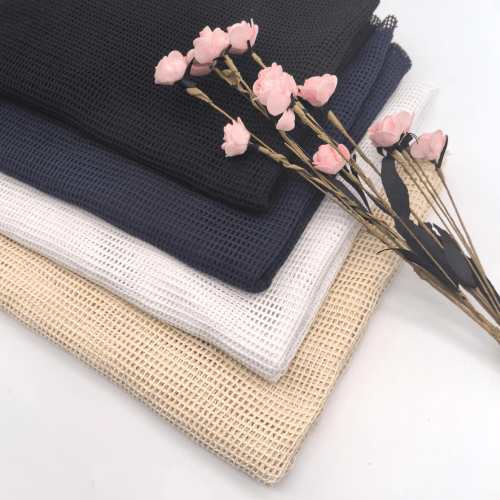
Cotton mesh fabric is a textile woven or knitted from 100% natural cotton fibers into an open, net-like structure. The evenly spaced holes across its surface are not a design detail. They are a functional feature that makes the fabric breathable, lightweight, and quick-drying.

What sets cotton mesh apart from other fabrics:

Made entirely from natural plant-based cotton fibers

Free from synthetic chemicals, plastic coatings, and artificial finishes

Allows consistent airflow through the fabric surface

Gentle and safe for direct skin contact including sensitive and baby skin

Fully biodegradable and environmentally responsible

Washable and durable enough for repeated everyday use

It is this rare balance of being both gentle and strong that makes cotton mesh a preferred material for so many different product categories.

The Main Types of Cotton Mesh Fabric

Buyers often make the mistake of treating all mesh fabrics as the same. They are not. The type of cotton mesh you choose will directly affect how your final product looks, feels, and performs. Here are the four main types:

Open Weave Mesh

Features large, clearly visible openings. Extremely lightweight and breathable. Best suited for vegetable storage bags, produce nets, laundry bags, and any product where ventilation is the main requirement.

Fine Mesh

Has tightly spaced, small holes. Softer and smoother than open weave. Ideal for baby bibs, face cloths, swaddle wraps, and delicate home textiles where skin contact is frequent.

Leno Weave Mesh

Built using a technique where warp threads are twisted in pairs around weft threads. This creates a firm, stable mesh that holds its shape under pressure. The right choice for structured bags, packaging liners, and home storage products.

Knitted Mesh

Constructed by looping yarn rather than weaving it. This gives the fabric a soft drape and slight elasticity. Works well for fashion accessories, reusable produce bags, and bath products.

Choosing the wrong type for your product is one of the most common sourcing mistakes. Always match the mesh type to the end use before ordering samples.

Understanding GSM and Why It Matters for Your Order

GSM means grams per square meter. It is the standard measurement for fabric weight and thickness. In cotton mesh, the GSM range determines how sturdy or delicate the fabric will be.

Low GSM (80 to 120)

Very light, thin, and airy. Best for produce bags, wrapping materials, and laundry bags where minimal weight matters.

Medium GSM (120 to 180)

Balanced weight with good structure. This is the most popular range for tote bags, kitchen linens, baby bibs, and general home textiles.

High GSM (180 to 250)

Thick and sturdy. Best for grocery bags, storage organizers, and any product that needs to hold significant weight without stretching or tearing.

Always request the exact GSM specification from your supplier before finalizing an order. A small difference in GSM can significantly change how a finished product feels and functions.

Weave Patterns and What They Mean for Product Quality

Beyond the fabric type, the weave pattern affects durability, stretch, hole size, and how the fabric behaves after washing. Here is a simple breakdown:

Plain weave produces consistent, evenly spaced holes. Easy to produce and cost-effective for high-volume orders.

Leno weave adds structural stability. Threads are locked in place so the holes do not shift during use or washing.

Knit construction creates a fabric that moves with the product and recovers its shape after stretching.

For buyers sourcing in bulk, always ask your manufacturer to confirm the weave construction alongside the GSM. Both together give you a complete picture of what you are ordering.

Best Product Applications for Cotton Mesh Fabric

Cotton mesh fabric is used across a wide range of industries. Here is where it performs best:

Eco Bags and Produce Bags

Open weave cotton mesh is the industry standard for reusable vegetable bags, fruit nets, and grocery bags. The open structure keeps produce ventilated and visible, extending freshness.

Home Textiles

Medium weight cotton mesh works well in bread bags, kitchen organizers, laundry bags, and bathroom storage. Breathability prevents moisture buildup, which is important for stored food and textiles.

Baby Products

Fine mesh is the safest option for baby bibs, burp pads, and swaddle wraps. It is soft against newborn skin, free of harsh finishes, and holds up well through repeated washing.

Bath and Kitchen Linens

The open texture of cotton mesh creates a mild exfoliating effect, making it ideal for face cloths, bath scrubbers, and dishcloths.

Sustainable Fashion and Accessories

Market bags, tote bags, and casual accessories made from cotton mesh are growing fast in the sustainable fashion space. Buyers value the natural texture and the ability to pair it with eco certifications.

Why Buyers Are Moving Away from Synthetic Mesh

Polyester and nylon mesh dominated the market for decades. That is changing. Here is why buyers are actively switching to cotton mesh:

Synthetic mesh sheds microplastics during every wash cycle. Cotton mesh does not.

Cotton mesh is biodegradable at the end of life. Synthetic mesh sits in landfills for hundreds of years.

Cotton mesh qualifies for GOTS, OCS, and OEKO-TEX certifications. Most synthetic mesh cannot.

Retail buyers in Europe and North America now require sustainability certifications from suppliers.

Consumers are actively choosing natural fiber products over synthetic alternatives.

The business case for switching to cotton mesh is no longer just ethical. It is commercial.

How Casa Fashion Manufactures Cotton Mesh Fabric in India

Casafashion is a certified Mesh Fabric Manufacturer in India based in Karur, Tamil Nadu, one of India’s most established textile manufacturing regions. The production process at Casa Fashion is built around quality, certification, and reliability:

100% organic cotton sourced from certified farms

GOTS certified manufacturing from yarn to finished fabric

Available in low, medium, and high GSM ranges across all mesh types

Custom specifications accepted including hole size, thread count, and fabric width

Consistent quality checks at every production stage before dispatch

Casa Fashion works with brands that need certifiable, export-ready cotton mesh fabric delivered on time.

Why Source Your Cotton Mesh Fabric from Casa Fashion

As a trusted Mesh Fabric Manufacturer in India, Casa Fashion offers buyers a reliable and transparent sourcing experience:

Internationally certified cotton mesh fabric with full traceability

GOTS, OCS, and OEKO-TEX certifications available for all product categories

Flexible MOQ options for both sampling and bulk production

Export experience across Europe, the United States, and the Middle East

Dedicated support for custom orders from private label brands and product designers

Competitive pricing without compromising on fabric quality or certification standards

Casa Fashion is the sourcing partner for brands that want cotton mesh fabric done right.

Conclusion

Cotton mesh fabric is not just another textile option. It is a smart, sustainable, and commercially strong choice for buyers who want to build products that meet today’s market demands. Understanding the types, GSM ranges, weave constructions, and best applications before you source gives you a real advantage. And when you are ready to move from research to order, working with a certified Mesh Fabric Manufacturer in India like Casa Fashion ensures you get quality fabric, verified certifications, and a manufacturing partner you can count on.