
Top Hemp Fabric Manufacturers in India | Sustainable Textile Suppliers & Exporters

Organic vs Conventional Cotton Fabric for Export: What International Buyers Actually Want

The global textile export market is going through a quiet but powerful shift. International buyers are asking sharper questions than ever before. They want to know where the cotton came from, how it was grown, what chemicals touched it along the way, and whether the people who made it were treated fairly.

For manufacturers and exporters in India, this shift changes everything about how fabric is sourced, processed, and presented to the world.

Casa Fashion has been working closely with international buyers across Europe, North America, and Australia for years. In this blog, we break down exactly what sets organic cotton apart from conventional cotton in the export context, and what serious buyers are genuinely looking for today.

What Is the Real Difference Between Organic and Conventional Cotton

Most people understand the basic idea. Organic cotton is grown without synthetic pesticides or fertilisers. Conventional cotton is grown using chemical inputs to maximise yield. But the actual difference goes much deeper than farming methods.

Conventional cotton is grown using synthetic fertilisers and pesticide sprays. It requires significantly more water per kilogram of fibre. Soil quality degrades over time with repeated chemical use. The fabric is often processed with harsh bleaching agents and chemical dyes, and the final product may carry residual chemical traces that concern sensitive skin users and baby product buyers.

Organic cotton, on the other hand, is grown using natural farming methods with no synthetic chemicals involved. It uses considerably less water when paired with rain-fed farming, supports long-term soil health, and is processed using low-impact dyes and natural finishing agents. Most importantly, it meets strict third-party certification standards before it can carry the organic label.

For export, the difference is not just about the product. It is about documentation, traceability, and the story a buyer can tell their own customers about where the fabric came from.

What International Buyers Are Actually Looking For

This is where most Indian manufacturers get it wrong. They assume international buyers simply want the cheapest option with the organic label attached. That assumption costs them orders.

Buyers from Germany, the UK, France, and the United States almost always ask for GOTS certification. GOTS stands for Global Organic Textile Standard, and it covers both the farming and the processing stages. A fabric labelled organic without this certification carries very little weight in regulated markets. Buyers also want a full chain of custody. They want to trace the cotton from farm to finished fabric without any gaps in the documentation trail.

Beyond certification, consistent quality across orders is something every serious buyer watches closely. One sample that looks excellent means nothing if the bulk order arrives inconsistent. International buyers place long-term orders. They need to know that the GSM, weave, shrinkage, and colour fastness will remain stable across every shipment.

More buyers today also require SA8000 or similar social accountability certifications alongside fabric quality reports. They want assurance that workers involved in manufacturing are paid fairly and work in safe conditions. Many European buyers have internal sustainability targets and actively avoid suppliers who use excessive plastic packaging. Recycled or minimal packaging combined with organic fabric signals a manufacturer who understands the full picture.

And then there is communication. Buyers choose suppliers they can communicate with clearly. Responsiveness, accurate lead time estimates, and honest updates when something changes build the kind of trust that keeps repeat orders coming.

Why Conventional Cotton Still Has a Place in Export

It would be misleading to say conventional cotton has no export value. It absolutely does.

Many buyers, particularly those sourcing for mid-range retail, hospitality textiles, and industrial applications, still prefer conventional cotton. The lower price point makes it competitive for volume-driven categories. Wider availability means shorter lead times for urgent orders. Consistent mechanical performance suits products like canvas bags, heavy-duty bed linen, and kitchen textiles well. And buyers in some markets are not yet required to source certified organic.

The key is that conventional cotton exports need to compete on quality, not just price. A well-finished, consistent, and reliably delivered conventional cotton fabric will always find buyers. The problem arises when manufacturers compete only on low cost without investing in quality control or finishing standards.

The Growing Demand for Natural Fabric Alternatives in Export Markets

Here is something many cotton-focused manufacturers are not paying close enough attention to.

International buyers are increasingly diversifying beyond cotton. They are looking at linen, bamboo, and most significantly, hemp as part of their sustainable sourcing strategy. Hemp fabric is gaining serious ground in European and North American markets. It requires no pesticides to grow, improves the soil it is grown in, uses far less water than cotton, and produces a durable breathable fabric that ages beautifully. For buyers with strong sustainability commitments, hemp ticks every box.

India is well-positioned to serve this demand, and Casa Fashion is already ahead of this curve by offering hemp fabric alongside cotton, bamboo, and linen options. Buyers who come looking for organic cotton often leave with broader sourcing conversations because the alternative fabric range opens up new product possibilities they had not originally planned.

Certifications That Make or Break Export Deals

If you are targeting European or North American buyers seriously, GOTS certification is not optional. It is the baseline. Beyond GOTS, buyers commonly look for:

OEKO-TEX Standard 100 for fabric safety and chemical testing

Fair Trade certification if ethical sourcing is a core part of the buyer’s brand story

ISO certifications for the manufacturing facility to establish process credibility

SA8000 for social accountability in the production environment

Casa Fashion maintains internationally recognised certifications that allow buyers to source with full confidence and use the certified organic claim directly in their product marketing.

Presenting Your Fabric With Full Transparency

Buyers are tired of vague claims. When presenting fabric to an international buyer, coming prepared with the right documents makes a significant difference:

Lab test reports for chemical content, shrinkage, and colour fastness

Certification documents with validity dates clearly visible

Fabric composition details with GSM specifications

Minimum order quantities and standard lead times

Sample availability and turnaround time for custom specifications

Transparency at this stage separates manufacturers who get the order from those who just get a polite thank you and no follow-up.

Why Casa Fashion Stands Apart as Hemp Fabric Manufacturers in India

Casafashion does not just manufacture fabric. We understand what international buyers need and build our entire supply process around meeting those needs consistently.

As trusted hemp fabric manufacturers in India, we offer a complete sustainable fabric range that includes organic cotton, hemp, bamboo, linen, and muslin. Each fabric category comes with proper certification, reliable quality control, and a manufacturing team that understands export requirements in detail.

Our buyers come back not just because the fabric is good but because the experience of working with us is smooth, honest, and dependable from the first sample to the final shipment.

What Sets Casa Fashion Apart for International Buyers

When buyers evaluate Casa Fashion as their sourcing partner, here is what consistently stands out:

A complete natural and organic fabric range under one roof

GOTS and OEKO-TEX certified products ready for regulated markets

In-house quality checks at every stage of production

Transparent pricing with no hidden charges

Custom fabric development for buyers with specific requirements

Experienced export team that handles documentation efficiently

Whether you are sourcing organic cotton for baby products, hemp fabric for sustainable apparel, or bamboo fabric for home textiles, Casa Fashion has the range, the certifications, and the reliability to support your business.

Conclusion

The question is no longer simply organic versus conventional. International buyers today are looking at the full picture — certifications, traceability, ethical manufacturing, sustainability credentials, and the reliability of their supply partner.

Conventional cotton still has strong export demand in the right categories and markets. Organic cotton commands premium value when backed by proper certification and consistent quality. And natural alternatives like hemp are growing faster than most manufacturers currently realise.

Casa Fashion is positioned to serve all of these needs as one of the leading hemp fabric manufacturers in India with a fabric range and export capability built specifically for what today’s international buyers actually want.

To discuss your fabric sourcing requirements or request samples, reach out to Casa Fashion at casafashions.com or call +91 94897 93788. Our team will connect with you shortly to understand your requirements and find the right fabric solution for your market.

Casa Fashion | Home Textile Manufacturer, Supplier and Exporter | India
Best Organic Cotton Mesh Fabric Manufacturer in India for Sustainable Textiles

Cotton Mesh Fabric : Everything a Buyer Needs to Know Before Sourcing

Every year, thousands of brands and product designers search for a fabric that is natural, breathable, durable, and certifiable. Cotton mesh fabric checks every one of those boxes. Whether you are developing eco bags, home textiles, baby products, or sustainable fashion accessories, understanding cotton mesh fabric before you place a sourcing order will save you time, money, and a lot of back-and-forth with suppliers. This blog walks you through every key detail so you can source with confidence and make the right fabric decision for your product.

What Exactly Is Cotton Mesh Fabric?

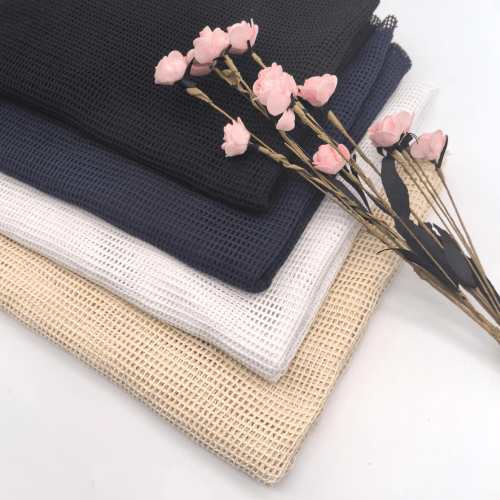
Cotton mesh fabric is a textile woven or knitted from 100% natural cotton fibers into an open, net-like structure. The evenly spaced holes across its surface are not a design detail. They are a functional feature that makes the fabric breathable, lightweight, and quick-drying.

What sets cotton mesh apart from other fabrics:

Made entirely from natural plant-based cotton fibers

Free from synthetic chemicals, plastic coatings, and artificial finishes

Allows consistent airflow through the fabric surface

Gentle and safe for direct skin contact including sensitive and baby skin

Fully biodegradable and environmentally responsible

Washable and durable enough for repeated everyday use

It is this rare balance of being both gentle and strong that makes cotton mesh a preferred material for so many different product categories.

The Main Types of Cotton Mesh Fabric

Buyers often make the mistake of treating all mesh fabrics as the same. They are not. The type of cotton mesh you choose will directly affect how your final product looks, feels, and performs. Here are the four main types:

Open Weave Mesh

Features large, clearly visible openings. Extremely lightweight and breathable. Best suited for vegetable storage bags, produce nets, laundry bags, and any product where ventilation is the main requirement.

Fine Mesh

Has tightly spaced, small holes. Softer and smoother than open weave. Ideal for baby bibs, face cloths, swaddle wraps, and delicate home textiles where skin contact is frequent.

Leno Weave Mesh

Built using a technique where warp threads are twisted in pairs around weft threads. This creates a firm, stable mesh that holds its shape under pressure. The right choice for structured bags, packaging liners, and home storage products.

Knitted Mesh

Constructed by looping yarn rather than weaving it. This gives the fabric a soft drape and slight elasticity. Works well for fashion accessories, reusable produce bags, and bath products.

Choosing the wrong type for your product is one of the most common sourcing mistakes. Always match the mesh type to the end use before ordering samples.

Understanding GSM and Why It Matters for Your Order

GSM means grams per square meter. It is the standard measurement for fabric weight and thickness. In cotton mesh, the GSM range determines how sturdy or delicate the fabric will be.

Low GSM (80 to 120)

Very light, thin, and airy. Best for produce bags, wrapping materials, and laundry bags where minimal weight matters.

Medium GSM (120 to 180)

Balanced weight with good structure. This is the most popular range for tote bags, kitchen linens, baby bibs, and general home textiles.

High GSM (180 to 250)

Thick and sturdy. Best for grocery bags, storage organizers, and any product that needs to hold significant weight without stretching or tearing.

Always request the exact GSM specification from your supplier before finalizing an order. A small difference in GSM can significantly change how a finished product feels and functions.

Weave Patterns and What They Mean for Product Quality

Beyond the fabric type, the weave pattern affects durability, stretch, hole size, and how the fabric behaves after washing. Here is a simple breakdown:

Plain weave produces consistent, evenly spaced holes. Easy to produce and cost-effective for high-volume orders.

Leno weave adds structural stability. Threads are locked in place so the holes do not shift during use or washing.

Knit construction creates a fabric that moves with the product and recovers its shape after stretching.

For buyers sourcing in bulk, always ask your manufacturer to confirm the weave construction alongside the GSM. Both together give you a complete picture of what you are ordering.

Best Product Applications for Cotton Mesh Fabric

Cotton mesh fabric is used across a wide range of industries. Here is where it performs best:

Eco Bags and Produce Bags

Open weave cotton mesh is the industry standard for reusable vegetable bags, fruit nets, and grocery bags. The open structure keeps produce ventilated and visible, extending freshness.

Home Textiles

Medium weight cotton mesh works well in bread bags, kitchen organizers, laundry bags, and bathroom storage. Breathability prevents moisture buildup, which is important for stored food and textiles.

Baby Products

Fine mesh is the safest option for baby bibs, burp pads, and swaddle wraps. It is soft against newborn skin, free of harsh finishes, and holds up well through repeated washing.

Bath and Kitchen Linens

The open texture of cotton mesh creates a mild exfoliating effect, making it ideal for face cloths, bath scrubbers, and dishcloths.

Sustainable Fashion and Accessories

Market bags, tote bags, and casual accessories made from cotton mesh are growing fast in the sustainable fashion space. Buyers value the natural texture and the ability to pair it with eco certifications.

Why Buyers Are Moving Away from Synthetic Mesh

Polyester and nylon mesh dominated the market for decades. That is changing. Here is why buyers are actively switching to cotton mesh:

Synthetic mesh sheds microplastics during every wash cycle. Cotton mesh does not.

Cotton mesh is biodegradable at the end of life. Synthetic mesh sits in landfills for hundreds of years.

Cotton mesh qualifies for GOTS, OCS, and OEKO-TEX certifications. Most synthetic mesh cannot.

Retail buyers in Europe and North America now require sustainability certifications from suppliers.

Consumers are actively choosing natural fiber products over synthetic alternatives.

The business case for switching to cotton mesh is no longer just ethical. It is commercial.

How Casa Fashion Manufactures Cotton Mesh Fabric in India

Casafashion is a certified Mesh Fabric Manufacturer in India based in Karur, Tamil Nadu, one of India’s most established textile manufacturing regions. The production process at Casa Fashion is built around quality, certification, and reliability:

100% organic cotton sourced from certified farms

GOTS certified manufacturing from yarn to finished fabric

Available in low, medium, and high GSM ranges across all mesh types

Custom specifications accepted including hole size, thread count, and fabric width

Consistent quality checks at every production stage before dispatch

Casa Fashion works with brands that need certifiable, export-ready cotton mesh fabric delivered on time.

Why Source Your Cotton Mesh Fabric from Casa Fashion

As a trusted Mesh Fabric Manufacturer in India, Casa Fashion offers buyers a reliable and transparent sourcing experience:

Internationally certified cotton mesh fabric with full traceability

GOTS, OCS, and OEKO-TEX certifications available for all product categories

Flexible MOQ options for both sampling and bulk production

Export experience across Europe, the United States, and the Middle East

Dedicated support for custom orders from private label brands and product designers

Competitive pricing without compromising on fabric quality or certification standards

Casa Fashion is the sourcing partner for brands that want cotton mesh fabric done right.

Conclusion

Cotton mesh fabric is not just another textile option. It is a smart, sustainable, and commercially strong choice for buyers who want to build products that meet today’s market demands. Understanding the types, GSM ranges, weave constructions, and best applications before you source gives you a real advantage. And when you are ready to move from research to order, working with a certified Mesh Fabric Manufacturer in India like Casa Fashion ensures you get quality fabric, verified certifications, and a manufacturing partner you can count on.

How Indian Tote Bag Manufacturers Are Winning Global Markets in 2026

How Indian Tote Bag Manufacturers Are Winning Global Markets in 2026

The global shift away from single-use plastic has created one of the most consistent and growing product demands of the last decade. Reusable bags are no longer an afterthought in retail strategy. They are a core part of how brands present themselves, how retailers comply with environmental regulations, and how consumers make daily purchasing decisions. At the centre of this shift, India has become one of the world’s most relied upon sources for quality tote bags. In 2026, that position is stronger than ever.

This blog explores exactly why international buyers from Europe, North America, Australia, and beyond are consistently choosing Indian manufacturers for their tote bag requirements and what makes India stand out from every other sourcing option available.

The Global Demand That Is Driving Everything

Plastic bag bans are now in effect across more than 60 countries. Here is what is pushing demand higher than ever:

The European Union Single Use Plastics Directive has pushed major retail chains across France, Germany, the Netherlands, and Scandinavia to permanently switch to reusable alternatives

In the United Kingdom, the plastic bag charge has made reusable tote bags a standard retail product rather than an optional accessory

In the United States, state-level plastic restrictions in California, New York, and several other states have created similar demand at scale

Consumer values have shifted globally, with shoppers in developed markets actively choosing brands that demonstrate environmental responsibility

A well-designed tote bag is no longer just a carrier. It is a brand communication tool that travels with the consumer through markets, offices, gyms, and daily commutes. Brands have recognised this and started investing in tote bags the same way they invest in product packaging and store design.

Why India Has Become the Answer for Global Buyers

India’s position as a tote bag manufacturing leader did not happen by accident. It is the result of several structural advantages that competing markets simply cannot replicate:

India is one of the world’s largest cotton producers, giving manufacturers direct access to the core raw material at source

Vertical integration from cotton growing to yarn spinning to fabric weaving to bag manufacturing gives Indian factories quality control at every stage

India has decades of experience in textile export, with a deep understanding of international compliance requirements, documentation, and shipping standards

The workforce across India’s major textile hubs is skilled, experienced, and supported by modern manufacturing infrastructure

Factories producing for international markets invest in quality equipment, trained staff, and systems that align with global retail standards

This combination of raw material access, manufacturing experience, and export readiness is what makes India the preferred sourcing destination for tote bags in 2026.

What International Buyers Specifically Look for in 2026

The tote bag buyer of 2026 is considerably more informed and demanding than buyers from five years ago. Sustainability claims must be backed by documentation. Quality must be consistent across every production run. Ethical manufacturing is a baseline expectation, not a bonus.

Certifications that international buyers now require:

GOTS (Global Organic Textile Standard) confirms that cotton used in the bag is genuinely organic and that the entire manufacturing process meets environmental and social criteria

OEKO-TEX Standard 100 confirms that all components including fabric, thread, dyes, and accessories are free from harmful substances

SEDEX or SMETA certification confirms the factory meets internationally recognised ethical trading standards covering labour rights, health and safety, and environmental responsibility

AZO-free certification on all inks and dyes confirms that printing materials do not contain compounds prohibited under EU chemical regulations

Beyond certifications, buyers in 2026 are asking detailed questions about carbon footprint, water usage in dyeing processes, and worker welfare programmes. Indian manufacturers who can answer these questions with proper documentation are consistently winning contracts over competitors who cannot.

The Customisation Capability That Sets Indian Manufacturers Apart

One reason global brands keep returning to Indian manufacturers is the depth of customisation available. Tote bags are a branding product and brands need their specifications met precisely and consistently.

Indian manufacturers offer customisation across every element:

Fabric weight selected based on intended use, from lightweight promotional bags to heavy-duty everyday carriers

Handle length, width, and attachment method adjusted to exact buyer specification

Gusset depth and base reinforcement designed according to the expected load capacity

Printing options including screen printing for bold logo reproduction, digital printing for detailed images, and embroidery for a premium finish

Colour matching done to international Pantone references so brand colours reproduce accurately across every production run

Packaging formats including individual polybag wrapping, header cards, box packaging, and retail-ready presentation options

This depth of customisation at competitive pricing with reliable turnaround times is what makes Indian manufacturers a genuine long-term partner for global brands rather than just a one-time supplier.

The Competitive Pricing Advantage That Still Holds in 2026

Despite rising wages and increased investment in quality and compliance, India continues to offer strong pricing relative to competing markets. Here is why the cost advantage holds:

Vertical integration of cotton sourcing and fabric production keeps raw material costs contained

The scale of India’s textile industry means machinery, technical expertise, and supply chain infrastructure are all well developed and widely accessible

Established manufacturers offer transparent pricing structures that eliminate the cost layers added by intermediaries

For buyers comparing sourcing regions, India consistently delivers a strong quality to cost ratio that is difficult to match elsewhere

The key is working directly with established manufacturers who have genuine export experience and a track record of delivering consistent quality across repeat orders.

Why Casa Fashions Stands Among the Leading Tote Bag Manufacturers in India

For international buyers who want quality, compliance, and customisation in one reliable place, Casafashion based in Karur, Tamil Nadu represents exactly that combination. As an experienced Tote Bag Manufacturer in India, Casa Fashions offers:

100% cotton tote bags across a full range of styles and specifications

Complete customisation from fabric weight and handle construction to printing method and packaging

Full transparency at every stage from sampling through production to final shipment

Reliable communication, consistent lead times, and quality that holds across every order regardless of volume

Every order begins with a detailed specification confirmation so both sides have complete clarity before production starts.

What Makes Casa Fashions the Right Tote Bag Manufacturer in India for Your Brand

Casa Fashions as a dedicated Tote Bag Manufacturer in India maintains the certifications and ethical manufacturing standards that international buyers require. Here is what sets the partnership apart:

Certifications that satisfy compliance requirements across European, US, and Asian markets

A team that works closely with each buyer to confirm every detail before any production begins

Consistent quality across seasonal and repeat orders with no compromise on standards

A Karur-based manufacturing setup that combines traditional textile expertise with modern production capability

For brands that need a manufacturer they can depend on season after season, Casa Fashions delivers that dependability without compromise.

Conclusion

India’s rise as a global tote bag sourcing destination is built on real structural strengths including cotton access, manufacturing experience, skilled labour, strong certifications, and deep customisation capability. In 2026 these advantages are more relevant than ever as global buyers demand higher standards, better documentation, and more sustainable supply chains from every manufacturer they work with.

Casa Fashions brings all of these strengths together as a trusted Tote Bag Manufacturer in India that understands what global markets need and consistently delivers it. Contact the team today at mail@casafashions.com or call +91 94897 93788 to discuss your requirements and take the first step toward a reliable long-term sourcing partnership.

Trusted Bed Linen Manufacturers in India | Affordable & Luxury Bedding Solutions

How to Choose the Right Bed Linen for Hotels, Resorts, and Hospitals

Think about the last time you stayed somewhere and the sheets felt scratchy. You probably did not sleep well. Now think about the last time the bed felt clean, cool, and smooth. You likely woke up refreshed and had a strong impression of the place.

That experience begins and ends with bed linen.

In hotels, resorts, and hospitals, bed linen carries a far greater responsibility than it does at home. It needs to survive industrial washing machines, meet strict hygiene standards, hold its shape after hundreds of wash cycles, and still feel comfortable to the person lying on it. A wrong choice at the sourcing stage can result in premature wear, rising replacement costs, guest complaints, or in medical settings, genuine safety risks.

Getting it right takes more thought than simply picking the softest option available. This guide walks through everything you need to know before placing an order.

Understanding What Each Setting Actually Demands

Hotels, resorts, and hospitals all use bed linen every single day, but what they need from it is very different.

A hotel wants linen that looks pressed, feels premium, and holds its appearance room after room. A resort wants linen that can handle sun, humidity, and active guests while still delivering a comfortable night. A hospital needs linen that can be sterilized at high temperatures, resists bacteria, and dries fast enough to keep beds ready for the next patient.

Before you choose any product, be clear about which environment it is going into. The same linen that works perfectly in a boutique hotel may fall apart quickly in a hospital laundry. Purpose drives every decision that follows.

Key Factors to Look at When Choosing Bed Linen

1. Fabric Type

Fabric is where every decision starts. The three most common options for institutional use are:

100% Cotton remains the most trusted fabric across hotels and hospitals worldwide. It is breathable, becomes softer with repeated washing, and handles high-temperature sterilization without breaking down. For any setting where hygiene is a priority, cotton is rarely the wrong choice.

Cotton and Polyester Blends dry faster and resist wrinkles better than pure cotton. They are a practical option for large hotel chains and hospital groups where laundry turnaround speed affects daily operations.

Linen Fabric is gaining ground in premium resorts and boutique properties. It regulates temperature naturally, wicks away moisture quickly, and becomes more comfortable with every wash. In warm or coastal climates, linen outperforms most alternatives for sleeping comfort.

For hospitals specifically, 100% cotton is almost universally recommended. It withstands sterilization temperatures that would damage blended or synthetic fabrics.

2. Thread Count

Thread count refers to how many threads are woven into each square inch of fabric. A common misconception is that a higher number always equals better quality. In institutional settings, that logic does not hold.

For hotels and resorts, a thread count between 200 and 400 strikes the right balance. It delivers softness and a quality feel without being too fragile for commercial laundry equipment.

For hospitals, a thread count between 150 and 200 is more appropriate. Simpler, tighter weaves at this range survive repeated industrial washing far better and take less time to dry.

Avoid extremely high thread counts for bulk institutional purchasing. They wear out faster under heavy laundering and cost more to replace.

3. Weave Style

How a fabric is woven changes both how it looks and how it performs in daily use.

Percale weave gives a cool, matte, crisp finish. It is breathable and strong, making it a solid choice for warm-climate hotels and all types of medical facilities.

Sateen weave creates a softer, silkier surface with a gentle sheen. Luxury hotels and premium resorts prefer it because the finish adds a visual sense of quality that guests notice immediately.

Plain weave is the most durable and the easiest to launder at scale. It is the standard in hospitals and budget properties where practicality matters more than aesthetics.

Choosing the right weave for the right environment reduces complaints and extends the life of every piece.

4. Color and Appearance

White dominates professional linen for practical reasons. It communicates cleanliness at a glance, can be bleached when stained, and creates a uniform, polished look across all rooms or wards.

Resorts, particularly those in nature or beach settings, can move toward ivory, warm beige, or soft earth tones without losing a professional feel. These shades complement natural surroundings and give properties a distinctive character.

Hospitals should stay with white or very pale pastels. Stains are easier to spot on lighter fabric, which is important for infection control monitoring.

Regardless of color, always confirm that the dyes used are AZO-free, colorfast through repeated washing, and safe for direct skin contact.

5. Size and Fit

Poor fit is one of the most overlooked problems in institutional linen buying. Sheets that are too small slip off mattresses constantly. Duvet covers that are too tight look stretched and untidy. Both create extra work for housekeeping staff and reduce the quality of the guest or patient experience.

Always confirm exact mattress dimensions before ordering. Sizes are not standardized across countries, so custom sizing is often the most reliable route when ordering at scale. Fitted sheets need deep pocket depths to grip the mattress properly. Flat sheets and duvet covers need enough extra length for clean, tight tucking.

6. Durability and Wash Performance

Institutional linen gets washed far more often than domestic linen. A busy hotel room may see its sheets washed 200 or more times per year. A hospital ward could be higher still.

Before finalizing a supplier, ask directly about wash cycle performance. Good institutional linen holds its softness, shape, and color through at least 200 to 300 industrial wash cycles. Look for fabric that has been pre-shrunk and treated to reduce pilling and color loss.

Linen that degrades quickly after 50 or 60 washes increases annual costs significantly and disrupts operations when replacements are needed ahead of schedule.

7. Certifications

Certifications are not optional when sourcing for healthcare settings. They are the baseline standard.

GOTS certification confirms the fabric is made from organic materials using non-toxic processes. ISO certification confirms the manufacturing facility meets international quality management standards. OEKO-TEX certification confirms the final product is free from harmful chemicals and safe for direct skin contact.

For hospitals, maternity wards, and baby care units especially, these certifications are non-negotiable requirements.

8. Laundry and Housekeeping Ease

Fabric that wrinkles heavily adds significant time and cost to daily operations. Every extra minute spent ironing or re-washing is a cost that accumulates across hundreds of rooms or beds.

Percale cotton and well-made cotton-poly blends iron smoothly and release creases after tumble drying. Fast-drying fabric keeps room turnover moving efficiently in hotels and ensures beds are ready sooner in hospitals.

When comparing products, always factor in how the fabric behaves post-wash. It matters just as much as how it feels before use.

Casa Fashion: A Trusted Bed Linen Manufacturer in India for Hospitality and Healthcare

Sourcing bed linen at institutional scale requires a manufacturing partner who understands the demands of the sector. Casa Fashion, based in Karur, Tamil Nadu, has built its reputation as one of the most reliable bed linen manufacturers in India by consistently delivering products that perform in demanding environments.

Casa Fashion produces a complete range of bed linen including flat sheets, fitted sheets, pillow covers, and duvet covers using 100% organic cotton, linen fabric, and natural fiber blends. Every product is made with AZO-free dyes, pre-shrunk for dimensional stability, and finished to perform across hundreds of industrial wash cycles.

Whether the requirement is for a luxury hotel chain, a network of hospitals, or a beachfront resort group, Casa Fashion builds products around the specific needs of each buyer.

Why Hotels, Resorts, and Hospitals Choose Casa Fashion Among Bed Linen Manufacturers in India

Working with the right manufacturer removes a significant amount of operational risk. Among bed linen manufacturers in India, Casafashion stands out for the following reasons:

GOTS and ISO certified production that meets global compliance standards

Custom sizing available for every bed type and mattress dimension

OEKO-TEX compliant fabric and skin-safe AZO-free dyes

Consistent quality maintained across large volume orders

Established export relationships with buyers in Europe, the USA, and the Middle East

Full product range covering every bed linen category from sheets to duvet covers

Casa Fashion works directly with procurement teams, hotel developers, hospital administrators, and wholesale distributors to tailor every order to the precise needs of the property or facility.

Conclusion

Bed linen in hotels, resorts, and hospitals is a working product. It is washed daily, inspected regularly, and judged silently by every guest or patient who uses it. Choosing the right fabric, weave, size, and certification level upfront saves money, reduces complaints, and protects the reputation of any institution that takes quality seriously.

For buyers who want linen that performs consistently at scale, Casa Fashion offers the manufacturing capability, certifications, and product range to meet those needs. As one of the most dependable bed linen manufacturers in India Casa Fashion is built to support institutions that cannot afford to compromise on quality.

Visit www.casafashions.com to explore the full range and speak directly with the team about bulk orders and custom requirements.

India’s Top Linen Fabric Manufacturers & Suppliers for Quality Textiles

Linen vs Cotton: Which Fabric Is Better for Home Textiles?

When you walk into a well-decorated home, the fabrics around you tell a story. The bedsheets feel soft against your skin. The kitchen towels are absorbent and quick-drying. The curtains hang with a natural grace. Behind all of this, two fabrics quietly compete for the top spot: linen and cotton.

Both are natural. Both are breathable. Both are widely used in home textiles across the world. But they are not the same, and choosing between them can make a real difference in comfort, durability, and value.

So which one wins? The honest answer is: it depends on what you need. Let us break it down simply.

What Is Linen?

Linen is one of the oldest fabrics in the world. It comes from the flax plant, which has been cultivated for thousands of years. The fibers are long, strong, and naturally resistant to moisture. Linen has a slightly textured, crisp feel that softens beautifully with every wash.

Its natural color ranges from off-white to beige, and it takes dyes well without losing its character. It is also highly breathable, which makes it a popular choice in warmer climates.

What Is Cotton?

Cotton comes from the cotton boll plant and is the most widely used natural fiber in the world. Its fibers are soft, fluffy, and easy to spin into yarn. Cotton is smooth to the touch, easy to care for, and available in a wide range of weights and weaves.

From lightweight muslin to heavy canvas, cotton adapts well to almost every home textile application. It is also more affordable than linen and easier to produce at scale.

Linen vs Cotton: A Simple Comparison

1. Softness and Feel

Cotton wins when it comes to immediate softness. Fresh cotton sheets feel smooth and gentle right away. Linen, on the other hand, starts slightly stiff but grows softer over time. After a few washes, linen develops a relaxed, lived-in comfort that many people love deeply.

For bedroom textiles like pillowcases and bed covers, both work well. Cotton is more welcoming from day one. Linen is a long-term investment in comfort.

2. Breathability

Linen is the clear winner here. Its natural fiber structure allows air to move through it more freely than cotton. This makes linen ideal for bed sheets, tablecloths, and towels used in warm or humid conditions.

Cotton is also breathable, especially in lighter weaves, but it tends to trap more heat than linen in heavier forms.

3. Durability

Linen is significantly stronger than cotton. Linen fibers are among the strongest natural fibers in the world. A quality linen product can last for decades when cared for properly. It does not pill, and it holds its shape well over time.

Cotton is durable too, but it tends to wear out faster than linen, especially with frequent washing. However, cotton blends and woven cotton products like canvas are highly resistant and built for long-term use.

4. Moisture Absorption

Both fabrics absorb moisture well, but linen absorbs and releases moisture faster than cotton. This is why linen towels dry quicker and feel less damp after use. For kitchen towels and bath textiles, this is a major advantage.

Cotton, especially in terry weaves, holds more water and is excellent for bath towels where softness and absorbency together matter most.

5. Care and Maintenance

Cotton is easier to wash and maintain. It handles machine washing well, dries quickly, and generally needs less special attention.

Linen requires a bit more care. It should be washed at lower temperatures and dried gently to maintain its quality. However, it rewards that care with longer life and better appearance over time.

6. Eco-Friendliness

Both are natural fibers, but linen has the edge in sustainability. Flax plants require very little water and almost no pesticides to grow. Linen production is energy-efficient and generates minimal waste.

Cotton, while natural, is one of the most water-intensive crops in the world. Organic cotton significantly reduces this impact, but conventional cotton farming still carries a higher environmental footprint than flax.

7. Price

Cotton is more affordable for most buyers. It is produced in much larger quantities, which keeps the cost down. Linen is priced higher because the production process is more labor-intensive, and flax cultivation is more limited.

For bulk home textile sourcing, cotton offers better value without compromising on quality. For premium products targeting export markets, linen commands a higher price and a stronger perception of quality.

Which Fabric Works Best for Each Home Textile?

Bed Sheets – Linen or Cotton: Linen for warm climates, cotton for everyday softness

Bath Towels – Cotton: Soft, absorbent, easy to maintain

Kitchen Towels – Linen: Dries fast, resists odors, highly absorbent

Curtains – Linen: Natural drape, elegant texture, light filtering

Table Covers – Linen or Cotton: Linen for formal settings, cotton for daily use

Baby Products – Cotton: Gentle, soft, and easy to wash

Carry Bags – Cotton Canvas: Strong, structured, and long-lasting

Why Not Both?

Many premium home textile products today use linen-cotton blends. These blends combine the softness of cotton with the strength and breathability of linen. The result is a fabric that is easier to care for than pure linen, more durable than pure cotton, and still natural and breathable.

For buyers sourcing from manufacturers, these blends can offer the best of both worlds at a competitive price point.

Casa Fashion: Your Trusted Linen Fabric Manufacturer in India

When it comes to premium quality home textiles made from both linen and cotton, Casa Fashion stands as one of the most reliable names in the industry. Based in Karur, Tamil Nadu, the home textile hub of India, Casa Fashion manufactures a wide range of products including bed linen, bath linen, kitchen linen, dining linen, baby textiles, and eco-friendly bags.

As a leading linen fabric manufacturer in India, Casa Fashion uses 100% pure linen, certified organic cotton, and natural fiber blends to produce textiles that meet international quality standards. Every product goes through careful quality checks to ensure durability, comfort, and eco-responsibility.

Whether you are a wholesaler, retailer, brand, or global buyer looking to source premium linen and cotton home textiles, Casa Fashion offers customized solutions with competitive pricing and reliable delivery.

Why Choose Casa Fashion Among Linen Fabric Manufacturers in India?

India has a rich textile heritage, and Karur is at the heart of it. Among the many linen fabric manufacturers in India, Casa Fashion differentiates itself through:

GOTS and ISO certifications that ensure global quality compliance

A product range that covers linen, cotton, bamboo, hemp, and muslin

Strong experience in exporting to Europe, the USA, and the Middle East

Sustainable manufacturing practices using eco-friendly dyes and processes

Customization options for private label brands and bulk orders

From fabric to finished product, Casa Fashion controls every step of the process to deliver consistency and quality that international buyers can trust.

Conclusion

Both linen and cotton are outstanding natural fabrics with their own unique strengths. Cotton is soft, affordable, and versatile. Linen is strong, breathable, and built to last. The right choice depends on the product you need, the climate you are designing for, and the quality level you want to offer.

For home textile businesses and buyers who want the best of both, partnering with an experienced manufacturer makes all the difference. Casa Fashion, one of the most trusted linen fabric manufacturers in India brings together quality craftsmanship, sustainable practices, and a wide product range to meet every home textile need.

Explore the full range at Casa Fashion and discover how Casa Fashion can support your home textile sourcing with products that are made to last.