

Why Fashion Designers Are Choosing Crinkled Muslin Over Linen for Resort Wear
Why Fashion Designers Are Choosing Crinkled Muslin Over Linen for Resort Wear
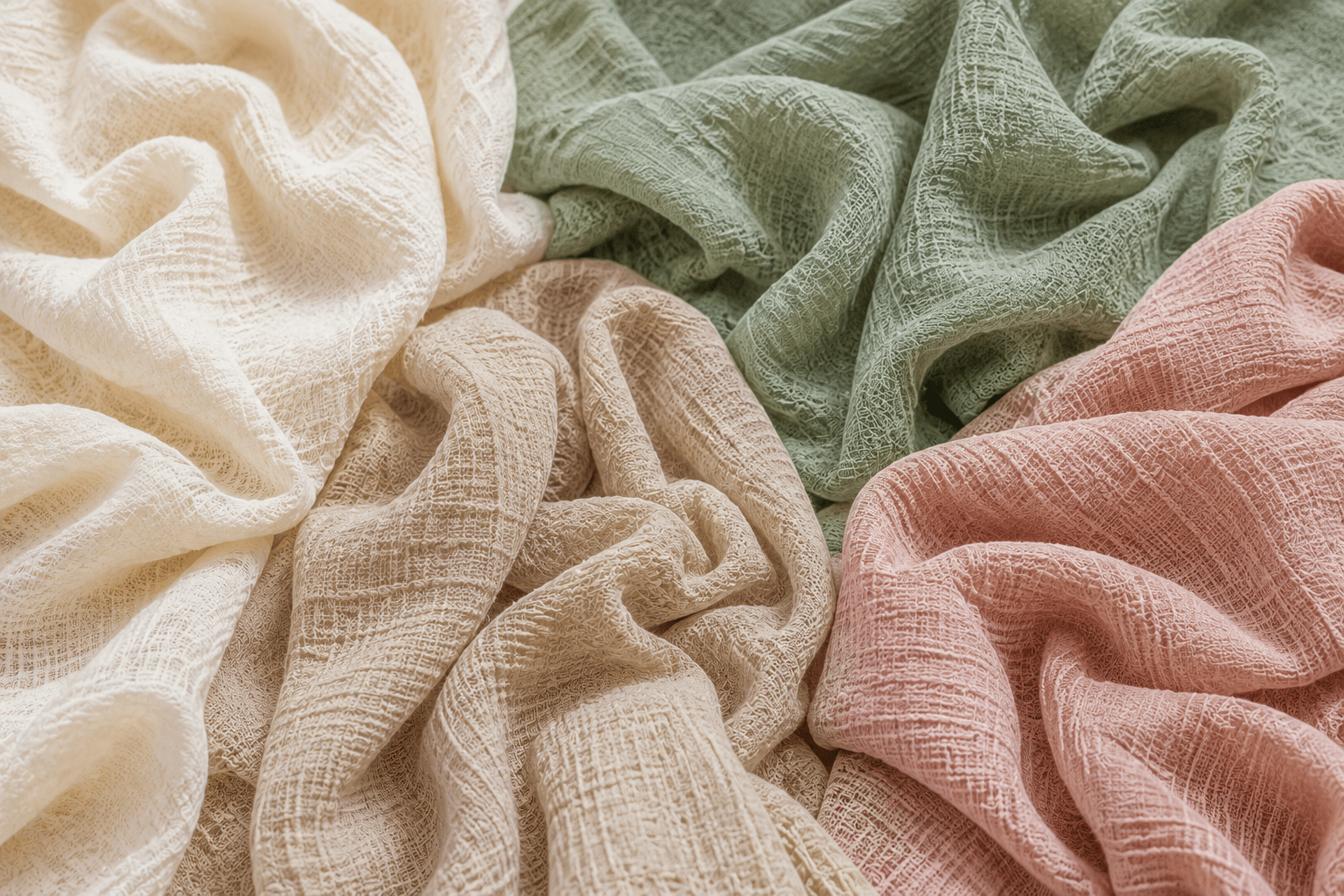
Crinkled muslin is fast becoming the fabric of choice for resort-wear designers who want relaxed movement, natural texture, and a lightweight drape that holds up in warm climates, and Casa Fashion has watched this shift closely as a leading crinkled muslin fabric manufacturer in India. While linen remains a strong option for structured silhouettes, crinkled muslin offers a softer hand-feel and a naturally textured surface that needs little ironing, making it ideal for kaftans, beach cover-ups, and layered resort pieces.
Why Fabric Selection Matters in Resort-Wear Collections
Every resort-wear collection depends on how the fabric moves. Silhouette, drape, and texture aren’t afterthoughts in warm-weather design; they are the design. A kaftan cut from a stiff fabric loses the effortless quality that defines the category, and a cover-up in a heavy weave clings and overheats instead of floating.
Resort wear is fabric-led rather than pattern-led, so designers often choose the material first and let it dictate the silhouette. The fabric also has to perform in real conditions—humidity, sun exposure, sand, and repeated washing between wears on a trip—so a material that looks beautiful on the runway but stiffens after one wash rarely solves the problem the category exists for.
Casa Fashion, a Karur-based manufacturer with years of weaving expertise, works closely with apparel brands to match fabric choice to design intent from the earliest sampling stage.
What Makes Crinkled Muslin Different From Regular Muslin?
Crinkled muslin starts as standard plain-weave cotton muslin and is finished with a controlled crinkling process that permanently sets a textured, puckered surface into the cloth. Unlike a pressed crease, this texture is mechanically set into the weave, so it survives normal wear and washing.
The result is a fabric with built-in visual texture, minimal ironing needs, and a slightly looser, airier drape than flat-woven muslin—typically falling in the 90–150 GSM range for apparel use.
Brands exploring this category can review the Muslin Gauze/Crinkle Fabric range to compare finish and weight options before sampling.
Crinkled Muslin vs Linen: What Should Designers Consider?
| Attribute | Crinkled Muslin | Linen |
|---|---|---|
| Fibre composition | 100% cotton | Flax fibre |
| Surface texture | Permanent, set crinkle | Natural slubby texture |
| Drape | Soft, fluid | Crisper, structured |
| Weight (GSM) | 90–150 GSM | 130–200+ GSM |
| Wrinkle behavior | Texture masks creasing | Wrinkles visibly |
| Best for | Flowing, unstructured garments | Tailored, structured garments |
Neither fabric is universally better—each solves a different design problem. Crinkled muslin wins when the brief calls for softness and movement; linen wins when the brief calls for crispness and structure.
Why Crinkled Muslin Works Well for Resort Wear
Kaftans and relaxed dresses depend entirely on fabric movement, and crinkled muslin’s texture adds visual dimension to an otherwise simple cut while letting the garment fall naturally.
Beach cover-ups need breathability and quick drying. The slightly open weave from crinkling improves airflow, and the low GSM keeps the garment light over wet skin.
Resort tunics and shirts benefit from a relaxed rather than tailored fit—the fabric holds a loose shape without interfacing, and the texture reads as intentional design.
Layering pieces, including overshirts and wrap-style garments, stay wearable in warm climates because crinkled muslin adds texture without adding bulk.
When Linen May Be the Better Choice
Crinkled muslin isn’t right for every piece. Structured resort trousers, shirt-jackets, or designs where linen’s characteristic slub texture is the design statement are usually better served by linen’s firmer hand and higher GSM. The decision should follow construction and design intent rather than a blanket preference.
How to Choose the Right Crinkled Muslin
Before bulk production, brands should confirm: GSM, usable fabric width, weave type, crinkle intensity, colour consistency across dye lots, shrinkage behavior, and wash performance of the crinkle texture.
Sample-to-bulk consistency should always be verified against the approved swatch, not assumed, and it is worth requesting these specifications in writing rather than a verbal agreement.
Casa Fashion’s team —a GOTS-certified, women-led manufacturing operation—supports designers through this specification process from swatch to final production sheet.
Why Brands Should Test the Fabric Before Bulk Production
A structured pre-production process protects design intent and budget:
- Swatch evaluation for hand-feel, colour, and texture.
- A garment prototype to assess drape and fit.
- Wash and shrinkage testing after laundering.
- Drape assessment on a body or mannequin.
- Colour and finish sign-off before bulk dyeing.
- A locked specification sheet covering GSM, width, and shrinkage tolerance.
Skipping these steps is the most common reason bulk shipments don’t match the sample.
Frequently Asked Questions
Is crinkled muslin good for resort wear?
Is crinkled muslin better than linen for kaftans?
What GSM is suitable for apparel?
Can crinkled muslin be customised?
What should designers check before ordering in bulk?
Conclusion
Crinkled muslin earns its place in resort-wear collections wherever softness and movement matter more than structure, while linen still suits more tailored resort silhouettes.
The right choice always follows the garment’s construction and design intent. Before scaling into bulk production, request a sample, run it through a full prototype and wash cycle, and lock specifications on a formal production sheet.
Ready to Test Crinkled Muslin for Your Next Collection?
Get in touch with Casa Fashion to request fabric samples and discuss GSM, width, and crinkle-intensity options for your design brief.